The Case Against Feature-Bloated Monitoring Tools
When did monitoring tools become so complicated? A manifesto for focused, developer-friendly observability.
Open any modern "observability platform" and you'll find: logs, metrics, traces, uptime monitoring, incident management, status pages, error tracking, session replay, synthetic monitoring, and probably a kitchen sink. When did we decide that developers need a PhD to read their logs?
The Problem with Everything Platforms
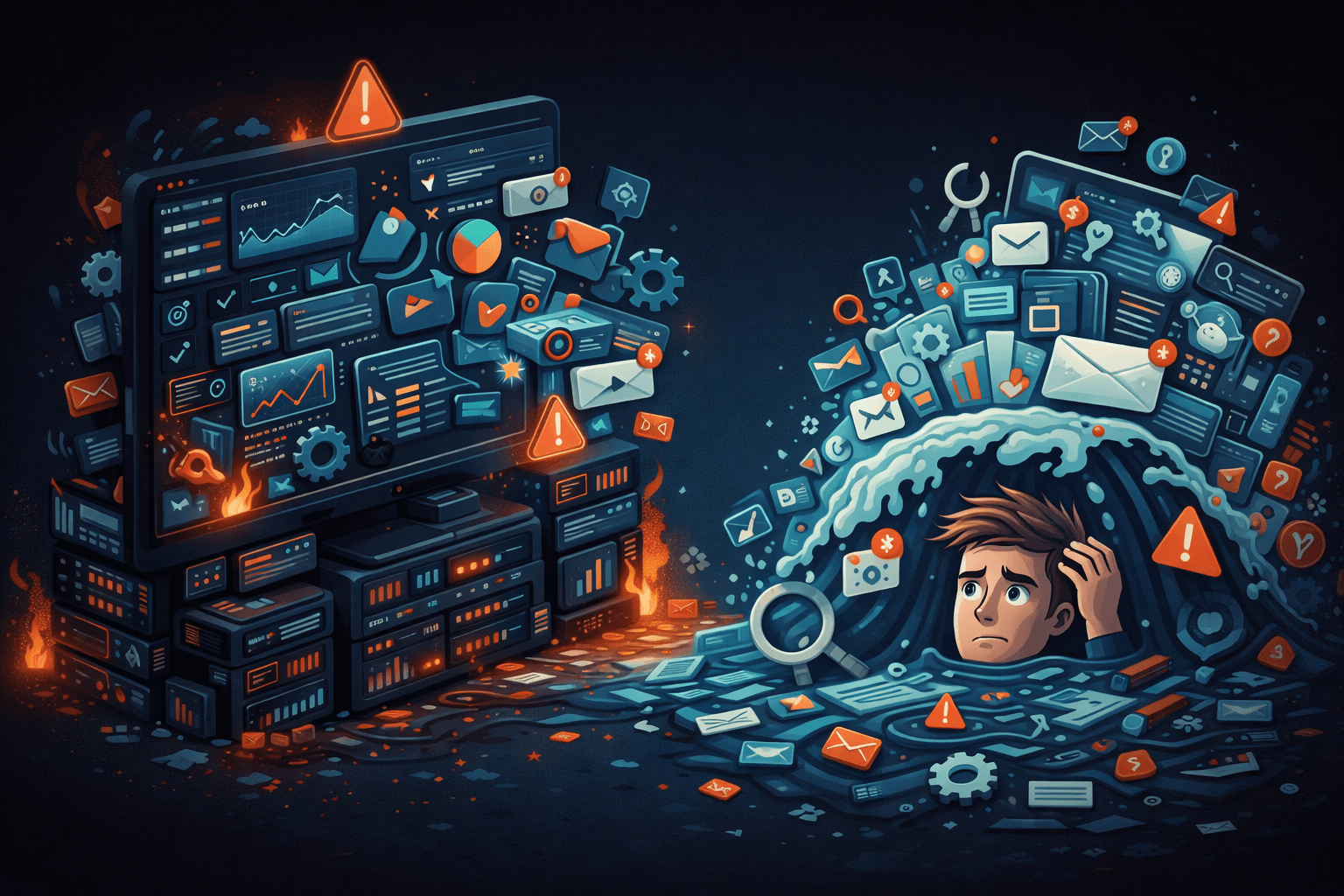
Cognitive Overload
Every feature is another thing to learn, configure, and maintain. Most teams use 20% of features but pay for 100%.
Navigation Complexity
Finding what you need takes longer. Menus are deeper. Context switches are more frequent. Simple tasks become multi-step journeys.
Unpredictable Costs
With multiple billing dimensions (hosts, users, data volume, features), costs are hard to predict. Surprise bills are common.
Integration Overhead
Each feature needs its own agent, SDK, or configuration. What started as "quick setup" becomes an infrastructure project.
What Developers Actually Need
Talk to developers debugging production issues. They need:
- Searchable logs from all their services
- Alerts when things break
- A UI that doesn't fight them
- Reasonable pricing
That's it. Not APM. Not distributed tracing. Not AI-powered anomaly detection. Just logs they can search.
The Unix Philosophy for Monitoring
"Do one thing and do it well"
The best tools are focused:
- Need logs? Use a logging tool
- Need uptime monitoring? Use an uptime tool
- Need APM? Use an APM tool
Specialized tools excel at their purpose. Everything-platforms are mediocre at everything.
Signs Your Tool Is Too Bloated
- You've never clicked most menu items
- New team members need training to use it
- You pay for features you don't use
- Simple queries require reading documentation
- The dashboard takes seconds to load
- You dread opening it
The Alternative
Choose tools that do one thing well:
| Need | Focused Tool | Bloated Alternative |
|---|---|---|
| Logs | 401 Clicks | Datadog Logs + 50 other features |
| Uptime | Pingdom, UptimeRobot | Better Stack suite |
| APM | Scout, Sentry | New Relic + infrastructure monitoring |
Benefits of Focused Tools
Faster Onboarding
New developers productive in hours, not days.
Lower Costs
Pay only for what you use.
Better UX
Tools optimized for one workflow.
Easier Maintenance
Less configuration, fewer things to break.
Conclusion
More features isn't better. The best monitoring setup is the one your team actually uses. For most teams, that means simple, focused tools that do one thing exceptionally well.
Don't let vendors convince you that you need everything. Start with what you need, and add more only when you hit actual limitations.
Admin
Published on October 10, 2025